
Hamnet
I am myself indifferent honest... and honestly indifferent about this movie.

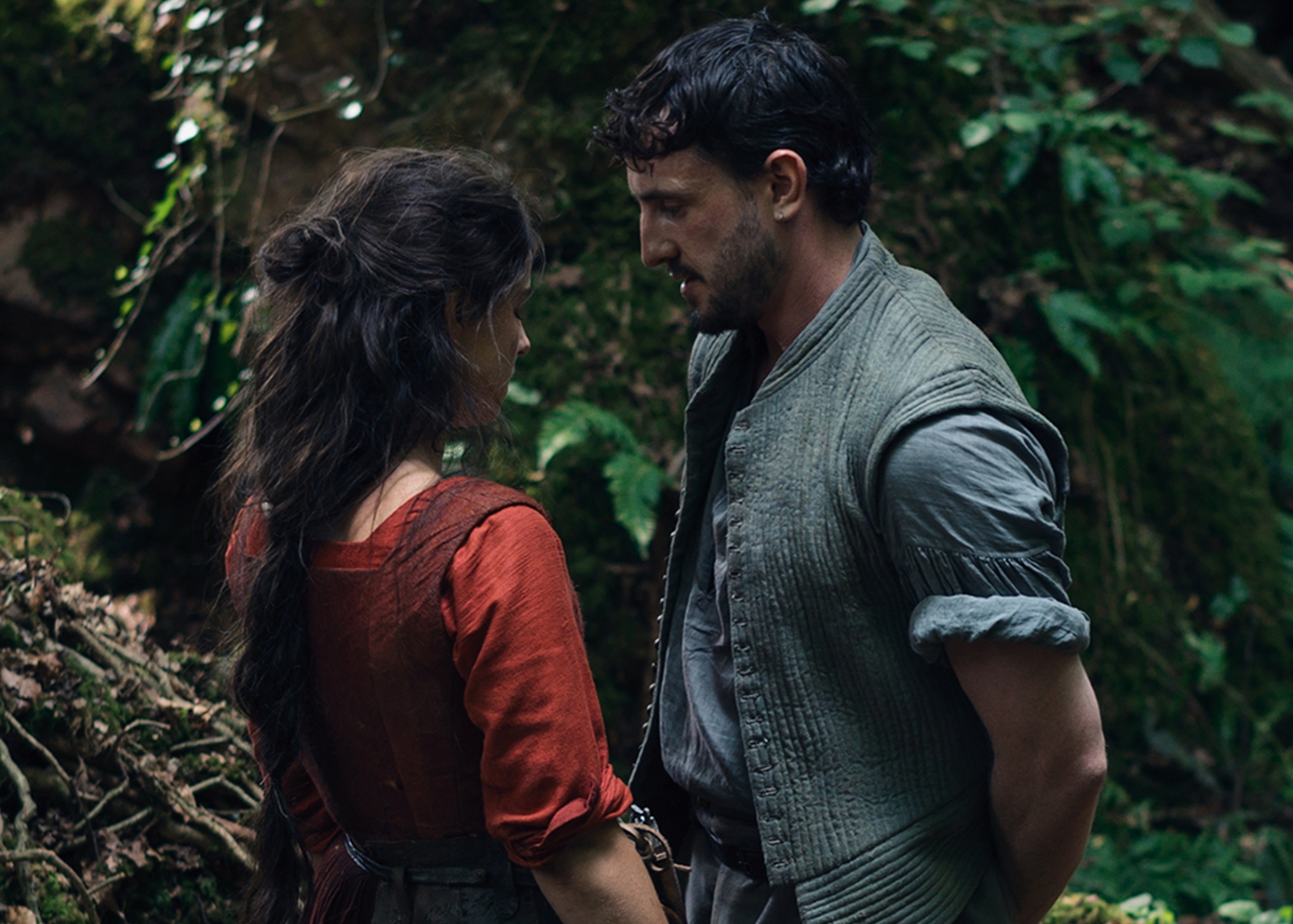

Spoilers ahead for this movie and some parts of Hamlet, so a double whammy here for Shakespeare fans.
The opening shot of Hamnet sees Agnes (Jessie Buckley) curled up at the base of a tree, seemingly more at ease sleeping out in the elements than under a solid roof. When she’s not napping in tree hollows, she’s picking mushrooms, gathering herbs for her remedies, or playing with her hawk. Her wood-nymph quality quickly catches the attention of one William Shakespeare (Paul Mescal), who is similarly wayward in his own way, an aspiring creative in a family whose blood runs thick with manual labour rather than the arts.
We know from historical accounts that the couple will marry and have three children, one of whom is the titular Hamnet. History also tells us that Hamnet would tragically die of unknown causes and William would go on to produce his most famous work, Hamlet. There’s not much in the way of detail, so Maggie O’Farrell’s 2020 novel, Hamnet, which this movie is based on, basically reverse-engineers the creation of Hamlet from the grief William and Agnes felt after losing their son. Juicy stuff on paper - literally - but the expected emotional pay-off doesn’t ring as true as what the premise promises.
For all the literary foundations Hamnet is built on, this is very much a vibes movie. Director Chloé Zhao depicts nature almost like a main character, with documentary-esque shots of forests and gorgeous lush greens wherever possible. This may well be the best movie to depict a forest environment in 2025.
Agnes and William also feel less like characters and more like enigmatic elemental beings. You don’t get much of a sense of who they are as ‘people’, but you feel the raw essence that emanates from them. Buckley is intensity personified, whereas Mescal finds several different ways to show how tormented he is. One could argue that Mescal’s William Shakespeare is too brooding and moody to be the mind behind some of literature’s wittiest lines, but he is ultimately the secondary role to Agnes’ overpowering aura in Hamnet. She’s the anchor, whereas he’s the rope.
Both actors carry Hamnet on the strength of their performances - Buckley in particular - but this is a sombre and occasionally baffling watch. You ‘get’ what they’re trying to do, but it feels like you’re always held at arm’s length. Sometimes the characters are shown living their day-to-day lives in a not particularly interesting way. At other times, it’s difficult to reconcile the honest emotion shown with what the characters do or say. There’s a scene where William has had too much to drink and is brooding over how his creativity is being stifled, yet his actions and words are not what human beings would realistically do.
Whereas the parents are primordial forces of nature, the Shakespeare children are rays of light by comparison, particularly Hamnet and his twin sister Judith. The casual ease in the family dynamic, the special bond between Hamnet and Judith, and the differing yet loving relationship Hamnet has with both parents make for some of Zhao’s best work in the movie. When Hamnet’s death finally hits us, it is a gut punch of agonising proportions and it sets the stage for an astonishing ending.
I can’t imagine anything worse for a parent than losing a child, but Zhao wisely explores grief here as a universal human concept rather than melodramatic parental loss. It is this section of Hamnet where Buckley’s performance peaks as her heartbreak over Hamnet’s death is pure heart-on-your-sleeve agony. Whereas Agnes’ pain is right in your face, William’s is more nuanced. Having played a father struggling with depression in 2022’s Aftersun, Mescal knows how close to the line he needs to toe. As William is pacing back and forth while watching a couple of actors rehearse scenes from Hamlet, his composed veneer slowly breaks as his frustration over the actors’ inability to convey the emotion he wants grows. Later, as William is walking along the Thames, seemingly on the verge of an emotional breakdown, he recites Hamlet’s famous ‘To be, or not to be’ soliloquy and recontextualises it as his own.
When William finally premieres Hamlet, things build to a transcendent emotional crescendo. As Agnes watches the play unfold - with William performing the part of the ghost of Hamlet’s father - she realises that this whole endeavour is her husband’s way of coping and she’s the only one who understands it. With the score building and Hamlet’s death approaching, Agnes grasps the actor’s hand and we see her envisioning Hamnet one final time, now smiling as he walks into the abyss. Powerful stuff, perhaps one of 2025’s best scenes.
Taken in the context of the whole movie, the finale feels a bit half-earned and somewhat emotionally manipulative. The underlying problems aren’t resolved by the finale, and sitting through 90 minutes of intense pain and grief in order to get a triumphant moment of catharsis at the end - complete with a soaring score in the background - rings a bit hollow.
While the highs in Hamnet are pretty damn high, I ultimately struggled to connect with the movie as a whole. The emotions may ring true, but I also don’t feel like I understood Agnes or even William Shakespeare any better as characters or real people. But that’s perhaps Chloé Zhao’s greatest trick. Having kept us at arm’s length for almost the entire movie, only to be mourning alongside Agnes and William by the end despite not being entirely on their wavelength, that’s one hell of a vibe.
Sharp observaton about keeping the audience at arm's length. That contradiciton between emotional distance and visceral payoff seems intentional - Zhao's betting on primal grief transcending character depth. Worked for me in that final scene where Agnes watches Hamlet, but I get why the journey there felt unearned. Sometimes a films power comes from what it withholds rather than reveals, tho that's a risky gambit when dealing with something as universal as losing a child.
I really appreciate your thoughtful review. The film really moved me on a visceral level. I think the subliminal reaction I felt is what art aims for. I liked Chloe’s “Nomadland” as well. Jessie Buckley is new to me. She’s a force to be reckoned with. Also I loved Mescal in “Aftersun.” The film too haunted me.
I subscribed to your stack, look forward to reading more of your reviews.